
Results · Finished panels
A closer look at the finish.
These panels went through the full AutoPlane workflow: filler, primer and clear. AutoPlane hand blocks were used on edges and in areas the leveling head couldn’t safely reach.
Original photographs, without retouching. Some vehicles are still being assembled.
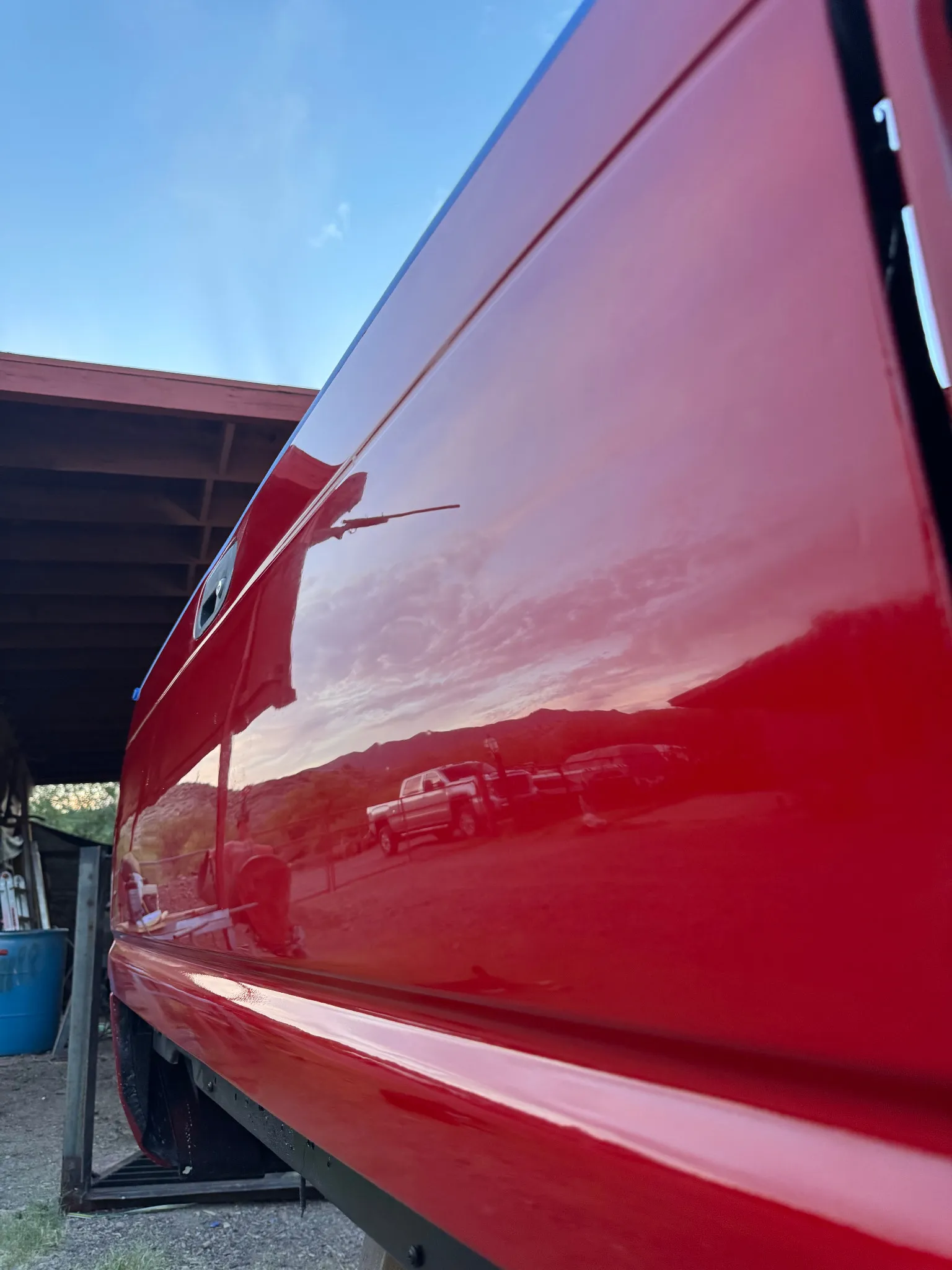
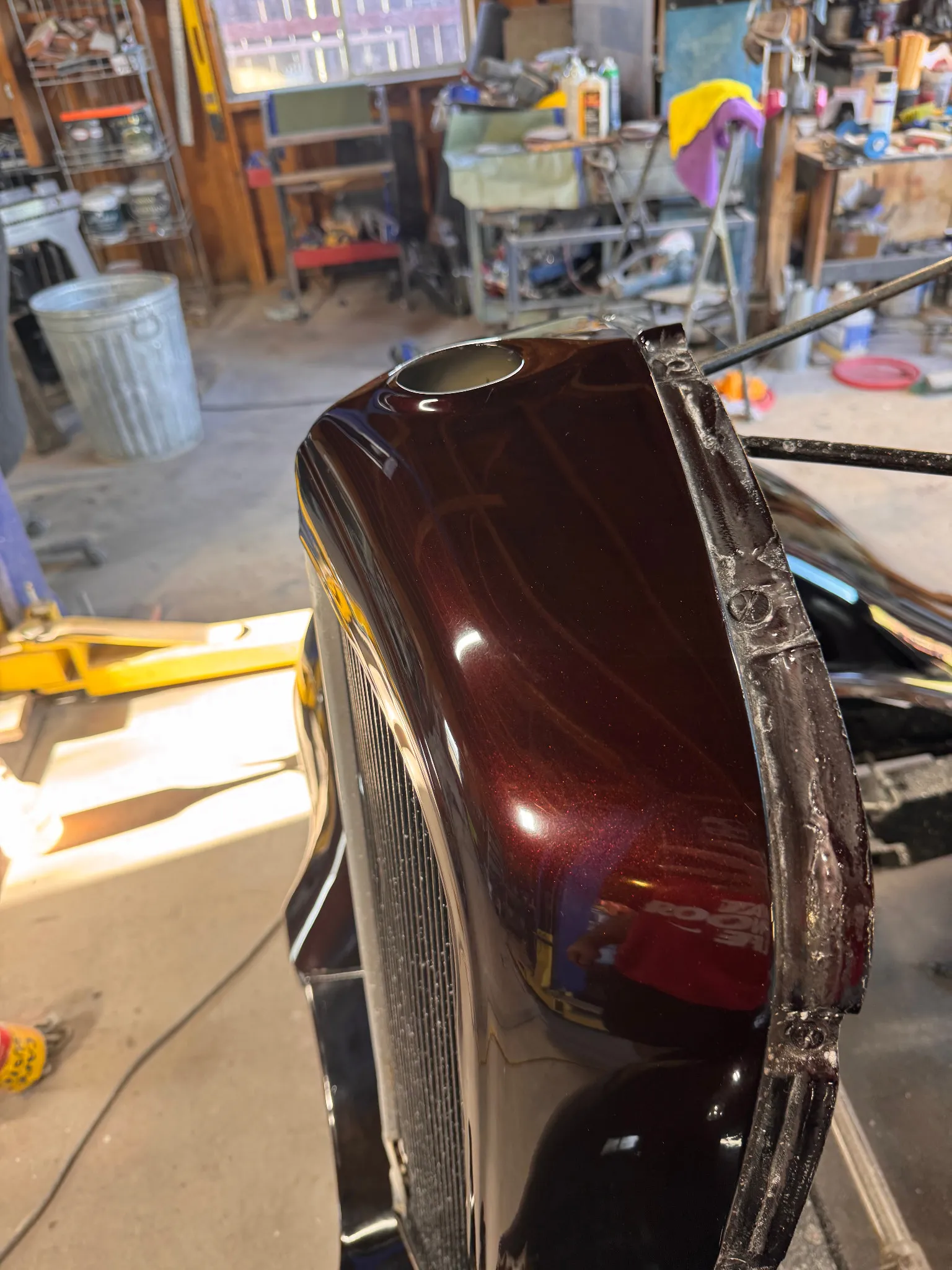
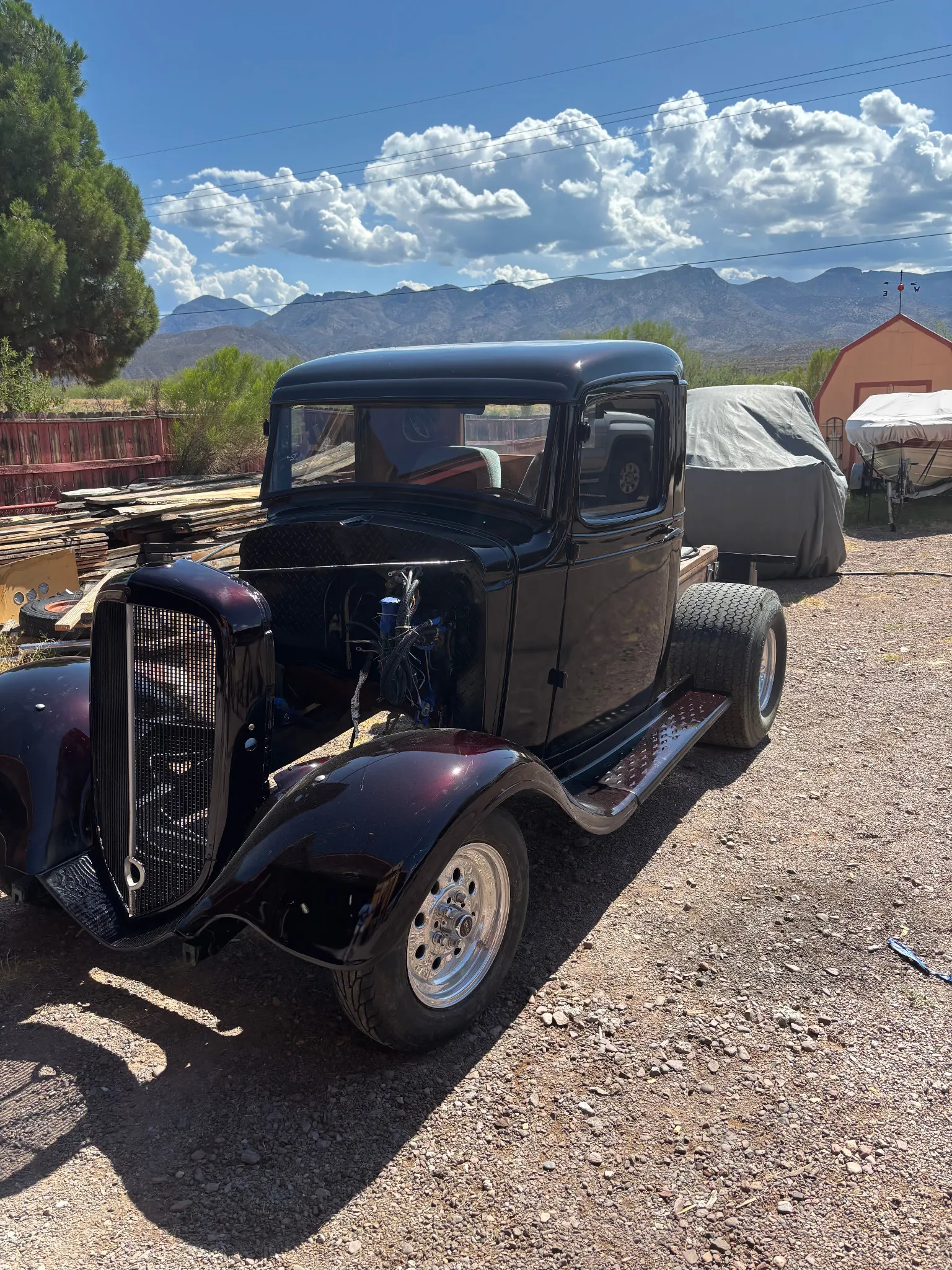
Use the arrows, left and right arrow keys, or swipe a photo to browse.
Results
What it's done so far.
A timed side-by-side test, reports from working shops, and lab work in progress. Each result says what kind of evidence it is.
AutoPlane on a DA vs. a hand block.
In this comparison, the AutoPlane run produced one third as much collected sanding dust as the long-block run. This is one test, not a prediction of material removal or repair results on every job.
Two filler repairs of the same size (about 6.5 sq ft each) with the same filler coverage, one sanded with AutoPlane on a DA and one with a hand block. P80, then P180. Both sides timed; sanding dust collected and weighed. One run.
A repair tech saved about 30 minutes on a filler job. That was enough for him to get his boss to have the painters try it too.
Repair tech, independent body shopThe whole 6-inch face stays on the panel through the curve, so more of the disc is cutting and the scratch pattern stays even across it.
Shops using it on curved panelsMore consistent results from one tech to the next.
Techs using it without us thereSurface texture measured at every phase, AutoPlane against traditional methods. Results here as they come in.
Lab profilometrySingle tests and shop reports, not averages. Your results will depend on the panel, the repair and the tech.